- Hide menu

Blog

Our December Photography Road Trip Part 2: Melbourne to Apollo Bay on the Great Ocean Road

The second leg of our road trip began in Melbourne, where we enjoyed a couple of comfortable nights’ sleep in a proper bed and eating out in restaurants, and carried on to Apollo Bay on the Great Ocean Road.

I only got my camera out of its bag once in Melbourne, to make a photo of the city skyline at sunset. We stayed in the same spot for a couple of hours, waiting, waiting and waiting again, first for the golden light, then for the sunset to hit the clouds and then again for the light to disappear and the city buildings to come alive. As it turns out, my favourite shot was from the first bit. For a fleeting moment, the clouds broke (behind us and to the left) letting the sun creep through and paint the city in a golden light. It was very fleeting – only around 60 seconds in total – so it was lucky I was paying attention and fired off a shot.


Melbourne City Skyline


After a weekend in comparative comfort (compared to the previous week camping in our tent), we set off for the great ocean road. Our first stop was Torquay which marks the start of the drive, where we stopped for some lunch and a bit of shopping before we carried on to our first overnight stay at Apollo Bay.


Great Ocean Road


Apollo Bay

It was a breathtaking drive from Torquay to Apollo Bay and we took our time as much as possible to enjoy the scenery and make the most of the experience. After finding a campsite and setting up the tent we went to scout the town for a place to shoot the sunset.

Apollo Bay is a beautiful little township where we lived for three days whilst we explored the nearby attractions. My diet wasn’t the best, if I remember rightly I had two pizzas and a portion of fish and chips for my three main meals during our stay.


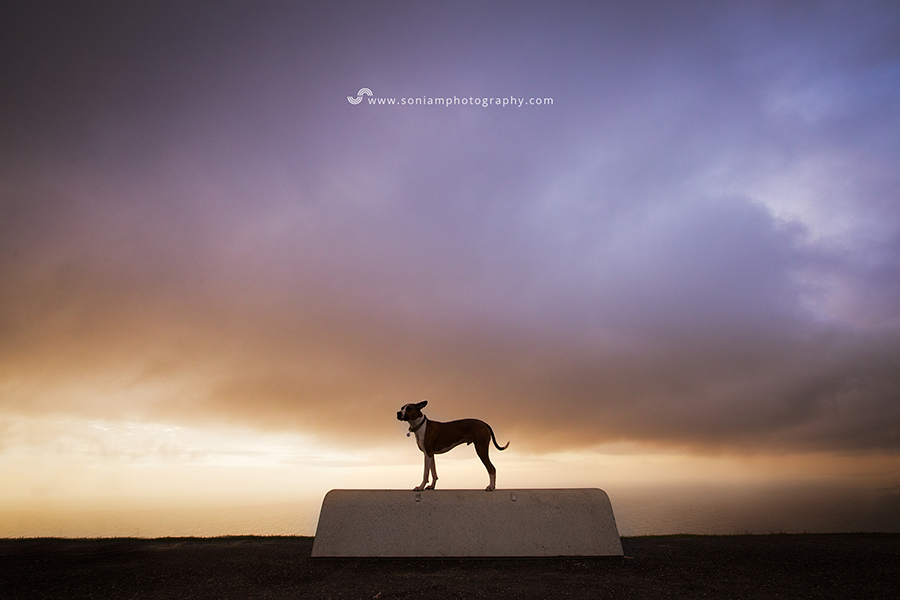
Whilst we were out shooting the sunset that first evening a dog started running around and getting in my shot. He had the courtesy to stay still for just a minute to let me take this photo of him!


And below is the shot I was trying to take…


The Redwood Trees

Somebody decided around 80 years ago that they would import and plant some Californian Redwoods in the middle of the Cape Otway National Park. Although they’re weren’t as humungous as the genuine centuries-old ones in their native land, it was still impressive to be up close to these giants.

Our car wasn’t really cut out for the off-roading that we had to do to get to the Redwoods and I was thankful when we made it out without popping a tyre. Seeing as we DID make it out in one piece, I can say that it was worth the effort!


Cape Otway (and the Koalas!)

Also a short drive from Apollo Bay, was the famous Cape Otway Lighthouse. It’s a pretty building in a great looking location, but honestly the best thing about it was the drive to get to it (the worst thing being the $17.50 per adult we had to pay to get near it).

A short way along the turn-off from the great ocean road we noticed a whole load of cars parked up on the side of the road and everyone was walking around, looking into the trees. As we got closer we realised that they were all looking at the wild koalas that were sitting around in the trees, right there on the side of the road. We had heard that koala sightings were possible in the area, but had never believed that there would be so many, so easy to spot. Just in this one small area of road (maybe 20 meters..) there were in excess of 20 koalas just lazing around on branches, some so close to the ground that you could have reached up and touched one if you happened to be Michael Jordan.


So after a relaxed time in the windswept Apollo Bay, we headed off to the main attraction of the Great Ocean Road – Port Campbell and the 12 Apostles….


Our December Photography Road Trip Part 1: New South Wales South Coast

Our first sunrise of the trip at Batemans Bay.


I know it’s a little late to be “blogging” about my December road trip, I can’t seem to get the hang of travel blogging and always end up making my posts retrospective rather than while I’m on the go. At least I get to edit my photos this way and only post my best (and I mean edit as in delete all the rubbish ones before they somehow make it online!).

Anyway, for anyone who doesn’t know, Sonia and I had what is fast becoming a regular annual occasion and took a road trip that saw us drive from our home in Sydney, along the NSW south coast to Melbourne (i.e. the long way around) and then on to the famous Great Ocean Road.

It really was a spectacular trip even given that we’ve spoiled ourselves with trips around Western Australia and New Zealand the previous two years. The scenery was well up there with the best of what we’ve seen elsewhere (ok, I said up there, not quite as stunning as the gorges of the Karijini or the drive to Milford Sound, but still pretty damn nice).

Batemans bay was our first stop and was pretty much just a layover to give ourselves a rest before moving further down the coast. After losing over an hour from having to turn back home to pick up our tripods that we had somehow left at home, the rest was a welcome one. We had a quick scout around the town when we arrived late in the afternoon to see if there was anything worth checking out at sunrise and found this jetty which we figured would do the trick. With the help of the photographers ephemeris on my iPhone I was able to know exactly where the sun would be popping up on the horizon so we headed out the next morning and took our first photos of the trip.


Next up would be Narooma, the highlight of which being the Glasshouse Rocks.


Half an hour before sunrise as the Glasshouse Rocks


We stayed a couple of nights in Narooma, enough time to relax, have a look around, take a few photos, relax… Oh I said that already…

The main attraction of this area is a rock formation on a not-so-easy to get to beach named Glasshouse Rocks. We had to plan ahead for this one and do a test run the day we arrived. To get to this place involves a 10 minute walk down a hill through bushland in the complete dark (unless it’s daytime of course), luckily one of our two headlamps still had a little bit of battery power so it wasn’t too bad, but I had to ignore the worry about what the hell might jump on me from all the trees and leaves that were brushing against me. Then once you make it to the beach you have to walk the entire length of it to get to the other end where these rocks are.

I took the above shot in a kind of panic, we hadn’t made it all the way up close to the rocks yet but my paranoia that we would miss the sunrise had me taking my gear out and getting a few shots from a distance. Only after I’m happy that I’ve got a decent photo can I really relax and enjoy myself. As it turns out, the blueness of the pre-dawn was an awesome factor in making this photo. By the time we made it up close to the rocks the light had already started to get much brighter and the colour disappeared fast.

The next shot was taken a few minutes after the one above and shows how much the colour changed in just a few minutes.


We got a little bit closer to the rocks this time before I felt the urge to grab a shot before the colours went bye byes. It was a good thing I did, for two reasons. By the time I did make it all the way to the rocks the colours in the clouds were pretty flat, but what would have sucked even more if I’d made it all the way up close before getting my camera out is that these rocks are HUGE and I could hardly fit them into my frame, even with a reasonably wide angle lens!

Just in case you are wondering how big these rocks actually are, below is a shot I took of Sonia standing in front of them the day before on our test run.


Mystery Bay Sunset


A little further down the road from Narooma is a beach/township named Mystery Bay. There’ not really that much to say about it except that there are some really cool rock formations in the sea that lend themselves greatly to a whole bunch of different compositional options for a photo or two. The sun peeked through the clouds for about 5 minutes to give us some interesting light just around sunset, which was just long enough for me to get the above shot.


A random deserted NSW beach


I can’t remember exactly where the beach in the above photo is as we were passing ones just like it pretty regularly. This time I just had to stop the car and get out for a proper look as it just looked like paradise.


Sunrise in Merimbula


Our final destination before crossing the border into Victoria was the beautiful seaside town of Merimbula. If you like taking photo’s of jetties in mirror-like lakes, then you need to go here. We spent two or three nights here and made the most of the sunrises and sunsets with a fair bit of relaxing in between on the mini-golf course lol. We were blown away by Mark Gray‘s gallery when we went to have a look inside. I’ve been a fan of Mark’s photography for a while and my fandom was set in stone as soon as I saw how glorious his photos look printed on the wall.

Our final evening in Merimbula was a pretty stormy one, which would have sucked if we were just having a regular holiday, but seeing as we were in photographer mode we thought “great!”. Just out of town and a few hundred yards down the road from where we were camping is this awesome rock shelf that just begged to be explored. Again, after sussing the place out in the daytime we arrived around half an hour before the sun was supposed to go down (supposed, because it was so grey and stormy, it was impossible to tell) and grabbed these next few shots.


I’ll be writing up the next part of our trip soon, which will cover melbourne and the Great Ocean Road – so thanks for reading and stay tuned!


Steve

Cathedral Rocks


Just a quick one today to share some photo’s I took at Cathedral Rocks near Kiama on the South Coast this morning at sunrise.

As always I enjoyed the morning photographing with my partner Sonia – see her blog post here to take a look at her photos and read a little more story about our morning.

Here we go then, straight onto the photo’s that as it turned out, were worth waking up at 3am for!


Night Landscape

I took a short drive down to Bald Hill on the NSW South Coast after work this week with the intention of scouting the location for some night time time-lapse video and ended up coming home with a pretty decent shot that stands on it’s own merits.

The sky was clear when I arrived but in the time it took me to set up my tripod and take a couple of test shots the clouds started forming overhead.

So this isn’t the shot I originally wanted but in the end the clouds give it an extra dimension which I quite like.


I expect to return here in the near future when the weather permits some clear night-sky viewing :)

my Astrophotography journey begins…

I’ve been fascinated with the universe and the night sky for a number of years but I suppose only passively, until a couple of months ago when I watched a number of documentaries back to back that really ignited that fascination, converting it into a what might be described as an obsession! So I started researching the milky way and the best times to view it, the types of photograph that can be made of it and where, locally I might be able to try to make a picture of it.

Here’s what I learned before taking my first shot:

The first point is an obvious one, but very dark and clear nights are better for stargazing.
The darkest nights occur when the moon is around a “new moon” phase which is when it is least visible (i.e. a tiny slither, or completely dark).
It’s best to be as far away from urban light pollution as possible.

Where I live, on the southern edge of Sydney, is ideal for getting away from the city lights and it’s just a short 10 minute drive into the Royal National Park rainforest. Last Thursday was a really clear evening and the moon wasn’t due to rise for another few hours so I packed up and headed down into the rainforest.

Here is my first ever shot of the milky way, that I took that night:

Here’s I learned from this first nights’ shoot:

You can get a decent shot of the milky way following some basic methods. These are; shoot at your lenses maximum aperture; shoot at a higher ISO than you might think normal; a 30 second exposure is about as long as you can make it without the stars showing movement in the sky (from the rotation of the earth).

Your camera can “see” more than your eye if you let it expose for long enough. What i mean by that is whilst I could make out the shape and position of the milky way in the sky with my own eyes at the time, the camera is picking up a lot more light over that 30 second exposure and so “sees” it much more vividly.


I was pretty happy with my first attempt and it gave me some confidence that I could take with me when Sonia and I were to go camping in Kangaroo Valley at the weekend.

Kangaroo Valley

About two hours drive south of Sydney is a beautiful area known as Kangaroo Valley. We headed down on Saturday knowing that should the clouds stay away we would have perfect conditions for shooting the milky way. We pitched our tent at a free camp site about 8km’s from the nearest village and when night fell we realised how lucky we were to have the clearest, darkest skies that I ever remember seeing. The milky way was right overhead, stretching across the entire sky from the south to the north. As impatient as I am, I wanted to make the most of it as soon as possible so I started shooting the tent with the night sky behind it. After a couple of shots I asked sonia to stand off to one side and illuminate the foreground with her headlamp, she duly obliged and the result was this next picture:


After some messing around outside the tent a sudden waft of mist engulfed the whole area so we quickly packed up and headed off to the spot we had earlier scouted for some star trail photographs.

In the end we had about half an hour of shooting left before the mist and clouds closed us off from our view, in which time I had managed to grab enough shots to make the following composite star-trail image:


The idea with a shot like this, is that if your camera exposes for long enough it will capture the movement of the stars in the sky as the earth spins on its axis. My prior research also led me to look for the “Southern Cross” which is the southern hemisphere’s equivalent of the North Star, which is the point in the sky that stays still whilst the rest spins around it. A great little iPhone app named Star Walk helped me locate this central point by overlaying a labelled rendering of the sky on my screen as I moved the phone around in front of me.

The catch with the method I used for this shot is that although the result is a 30 minute exposure, it was not truly a one-shot exposure. By taking 60 continuous 30-second exposures (turning OFF the noise reduction in camera so as to not have to wait 30 seconds between shots) and then combining them into one with a handy little program called StarStax, you can achieve the same effect.

The stacking of multiple exposures is a lot less risky in terms of things that can go wrong when compared to a single loooong exposure. For example, a few planes flew across my shot creating out-of-place light trails that streaked across my picture. But because they only showed up on one or two individual frames I was able to just exclude them from the final piece. (The downside of this is that if you cut too many shots out you will get gaps in your star trails – as what actually happened here, but I was happy to take the hit on that over having the planes ruin the whole shot). If I was doing this in just one single exposure, there would have been a good chance that the planes would have shown on my final image and I would be stuck with them! I did leave one section of plane-trail in the shot, notice the yellow line just behind the trees and then imaging three of those streaking across my entire photo at various angles…

Other points to note about this shot, and this technique in general;

The closer the stars are to the point of rotation, the shorter their trail will be.

Clouds started coming into the shot for the second 15 minutes which although did not ruin the image completely, it did break up the star trails quite a bit – notice the dotted lines towards the right side of the photo.

With noise reduction turned off and high ISO’s being used (in my case 6400 on my 5dMk2), having a fast lens would really help. My 24-105 lens only goes as wide as F4, if I were using an F1.8 i could have dropped the ISO to a much more friendly value like 800-1600… Or just kept the high ISO and made those stars REALLY shine. But really this is the first time I’ve felt like I was pushing the limits of my equipment. The noise in the image really is very high and although Lightroom does a good job of fixing it, I’d rather get a clean shot to begin with. I really need to consider a fast, wide angle lens as my next investment.

When choosing between the two techniques (multiple stacked shots vs one long exposure), the kicker for me is that you can get double value from the multiple shot method – you can sequence them into a time lapse video! Although half an hour of shots only gave me enough for two seconds of video (so is not worth posting here) it was enough for me to see the milky way drifting across the sky in front of me!


Well, i’m not sure if this blog post is well structured, makes sense, or is news to anyone – I’ve just been performing a bit of a brain dump – but hopefully you will at least enjoy the photos :)


And before you go, please take a look at this link – Sonia has uploaded some VERY cute shots of some wombats that were wandering around our camp site in Kangaroo Valley :)

See you next time

Steve